
Las Vegas Show
KÀ by Cirque du Soleil
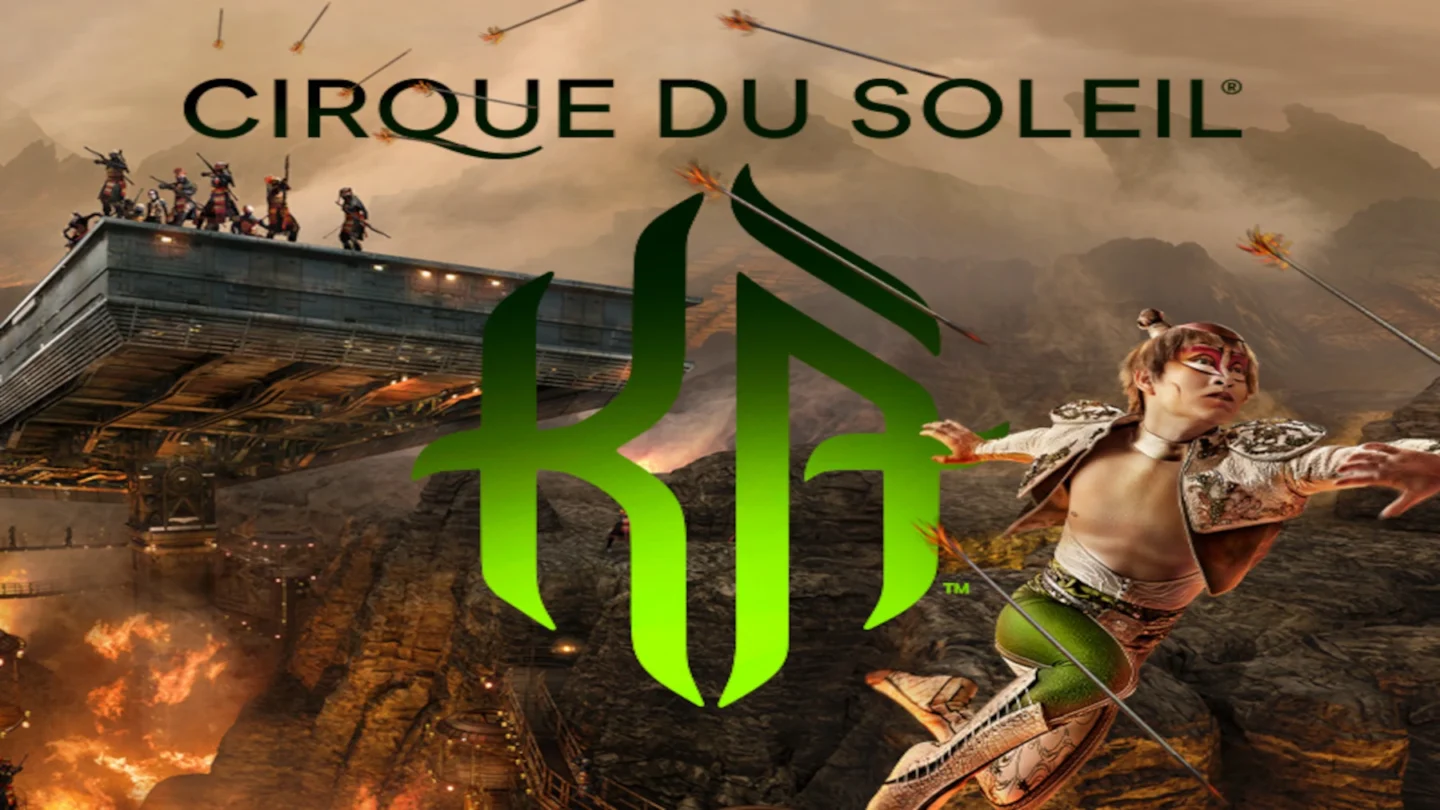
KÀ is Cirque du Soleil’s most technically ambitious production in Las Vegas, built around a massive rotating stage that transforms the theater itself into part of the performance. It’s less about traditional circus spectacle and more about cinematic scale, precision choreography, and visual immersion.
Best Ticket Deals
Live show dates · No booking fees · Official ticket sellers
-
💸 Ticket Discount
Save 25%Save on Tickets
Enjoy up to 25% off tickets.
View Deal
Snapshot Verdict
- Overall vibe: Large-scale, dramatic Cirque du Soleil production focused on combat choreography and stage mechanics
- Best for: Visitors who enjoy massive theatrical productions and visually intense staging
- Biggest downside: Serious tone and loose narrative may feel emotionally distant
- Show style: Cirque du Soleil theatrical spectacle with martial-arts choreography and advanced stage mechanics
- Show intensity: High — visually intense with loud sound effects and dramatic staging
What This Show Actually Is
KÀ by Cirque du Soleil in Las Vegas is a large-scale theatrical production performed at the KÀ Theatre inside MGM Grand. The show blends acrobatics, martial-arts choreography, and elaborate stage mechanics to create a performance that feels closer to a live-action film than a traditional stage production.
The defining feature is the massive rotating stage, which tilts, lifts, and reorients performers throughout the show. Entire scenes unfold vertically or at steep angles, with performers climbing, falling, and fighting while the environment moves beneath them.
Unlike many Cirque productions, KÀ is not playful or whimsical. The tone is serious and controlled, with long stretches focused on choreography, combat-style movement, and visual tension. Dialogue is minimal and mostly symbolic, serving primarily to connect the visual sequences rather than tell a detailed narrative.
For viewers interested in how engineering, lighting, choreography, and acrobatics combine into a single production system, the show delivers that experience at a very high level.
Who This Show Is Best For
- Visitors seeing a Cirque du Soleil show for the first time
- Audiences drawn to large-scale, high-budget productions
- Viewers who enjoy technical precision and dramatic staging
- Guests who prefer visual storytelling over comedy or audience interaction
Because the production emphasizes spectacle and stage mechanics, it often appeals strongly to visitors looking for a major Las Vegas theatrical experience.
Who May Want to Skip It
- Visitors looking for humor or playful energy
- Guests who prefer intimate theaters or close performer interaction
- Audiences expecting a clear, emotionally driven narrative
- Anyone sensitive to loud sound effects or intense visual movement
While visually impressive, the show’s tone and pacing can feel more serious than other Cirque productions.
Venue & Seating Experience
KÀ is performed at the KÀ Theatre, a venue built specifically for the production inside MGM Grand.
The theater is designed around the show’s massive stage mechanics and offers clear views from most seating sections. However, seat placement can still affect the experience:
- Mid-to-lower seating often provides the best balance between immersion and stage visibility
- Sitting too close can make it harder to see the full stage during vertical sequences
- Very high seats reduce some of the visual impact of the production’s scale
Because the show relies heavily on vertical movement and mechanical staging, being able to see the entire stage helps capture the full effect.
You can view current seating sections and ticket availability through official ticket sellers.
How Long the Show Is
KÀ runs about 90 minutes with no intermission.
The pacing alternates between large action sequences and slower transitions designed to reset the stage mechanics. Because of the scale of the production, these quieter moments are necessary for repositioning the massive stage elements.
Guests should plan to arrive 20–30 minutes before showtime to allow time for seating.
How It Compares to Other Vegas Shows
Compared with other Cirque du Soleil productions like O or Mystère, KÀ is darker, more serious, and more mechanically driven. While those shows often emphasize visual poetry or playful performance, KÀ focuses heavily on engineering, choreography, and combat-style staging.
For audiences who appreciate technical spectacle and dramatic visuals, this approach can feel especially impressive.
If you’re comparing entertainment options for your trip, our guide to the Best Shows in Las Vegas highlights several of the most popular productions currently running on the Strip.
Final Take
KÀ is not designed to be universally charming — it’s designed to impress through scale, control, and technical mastery. The production showcases one of the most complex stage systems ever built for a live show, and the performers execute it with remarkable precision.
For visitors who want to experience a Cirque du Soleil production at its most ambitious and visually intense, KÀ remains one of the defining spectacles on the Las Vegas Strip.
If KÀ sounds like the right fit, checking seating and availability ahead of time is worthwhile.
✨ Highlights
- ⭐ Large-scale rotating stage that redefines scene movement
- ⭐ Martial-arts-inspired choreography and acrobatics
- ⭐ Purpose-built theater designed exclusively for the show
- ⭐ Serious, cinematic tone with minimal humor
❓ Frequently Asked Questions
Is KÀ suitable for kids? ▼
KÀ is appropriate for older children and teens who can sit through a long, serious production. Younger kids may find it intense or hard to follow.
Does KÀ have a clear story? ▼
There is a loose narrative framework, but the story is secondary to the visual and physical performance. Most viewers experience it more as a sequence of visual set pieces.
Is KÀ funny? ▼
No. Humor is minimal, and the tone is generally serious and dramatic.
How long is the show? ▼
KÀ runs approximately 90 minutes with no intermission.
Is KÀ a good first Cirque du Soleil show? ▼
Yes, particularly if you want to see Cirque at its largest scale and most technically ambitious, rather than its most playful or emotional.